TL;DR: Port state control looks at life-saving appliances as a system, not a list. The usual findings are stowage, marking, release arrangements and records — items a crew can fix before the inspector arrives. Prepare the four groups below and most observations disappear.
A life-saving appliance checklist is a pre-inspection walk-through of the equipment a surveyor will actually open, test or ask about: lifebuoys and their lights, lifejackets and immersion suits, liferafts and their cradles, distress signals, embarkation ladders and the launching appliances that serve them.
What the inspector opens first
On most ships the walk starts at the lifebuoy rack, then moves to the jacket locker, the raft cradles and the embarkation station. The pattern is the same everywhere: count what is mounted, read the markings, then ask for the record that proves the item was serviced.
1. Lifebuoys and their attachments
Count the buoys on each side, check the self-igniting light and the buoyant line, and confirm the quick-release bracket actually releases. A buoy that is wired to the rack is a finding, not a shortcut. Markings should show the vessel’s name and port of registry.
2. Lifejackets and immersion suits
Open the locker and take out three or four, not the top one. Look for perished straps, missing whistles, torn covers and a light that no longer flashes. Immersion suits need a pressure test record and a visible date; a suit folded so tightly that the zip has taken a set is worth replacing.
3. Liferafts, cradles and release arrangements
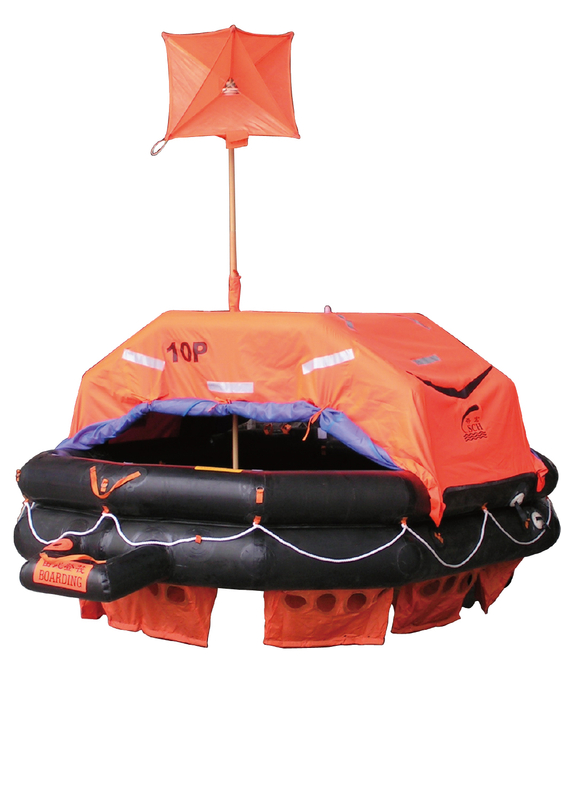
This is where most defects sit. The raft itself is a service item, but the cradle, lashing, hydrostatic release unit and painter are ship’s equipment. Check the release unit arrow, the weak link, the lashing tension and the cradle feet. Confirm the painter leads outboard and is long enough to reach the embarkation point.
4. Signals, ladders and launching appliances
Distress signals are checked for seal, expiry and stowage. Embarkation ladders are checked for rot, missing steps and secure lashing. Davits are checked by moving them: slew the arm, check the limit, look at the wire and the brake. An inspector who cannot move the davit will record it.
Comparison: what gets recorded, and what to prepare
| Item | Common finding | What to have ready |
| Lifebuoy | Light not working, bracket seized, no markings | Service record for lights, spare batteries, bracket freed and greased |
| Lifejacket | Perished strap, missing whistle, light dead | Count against the certificate, log of replacements |
| Immersion suit | No pressure test record, zip set, seam leak | Test certificate, date marked inside the suit |
| Liferaft | Service overdue, cradle rusted, lashing hard | Service station certificate, cradle inspection note |
| Release unit | Installed upside down, weak link wrong | Correctly assembled unit, spare weak link on board |
| Distress signals | Expired, seal broken, stowed in a damp locker | Expiry list, dry stowage, replacement schedule |
| Embarkation ladder | Rotten steps, lashing loose, painted over | Ladder inspected and re-lashed, spare step |
| Davit | Seized pivot, wire kinked, brake slipping | Greased pivot, wire inspected, brake test |
Records decide half the outcome
A surveyor can only accept what is documented. Keep the service certificates, the monthly inspection sheets and the replacement log in one folder on the bridge, not spread across three cabinets. Dates on certificates should match the dates on the equipment. Where a unit has been replaced, note the old serial number and the new one; a missing trace is treated as an overdue item.
Drills matter too. The last abandon-ship drill date, the names of the crew who launched the raft and the report of any defect found during the drill are the three things an inspector asks for after looking at the gear. If the drill report says the painter was too short, the fix should be visible on the cradle.
Five questions crews ask
1. Can we fix findings during the inspection?
Minor items such as a missing marking or a freed bracket can often be corrected on the spot and re-checked. Structural items need a record and a date.
2. Is a raft service overdue a detention item?
It is a serious finding. The usual path is a short deadline to exchange the raft, not an immediate detention, but the ship may be restricted until it is resolved.
3. Do spare parts count as compliance?
Only if they are the right part and stored where the crew can reach them. A spare weak link in a sealed box in the store is better than none, but not as good as one on the cradle bracket.
4. How often should the cradle be inspected?
Monthly, together with the raft lashing and release unit. After heavy weather or a drill, look again; rust and chafe show up quickly.
5. What if the vessel has two raft types?
Keep separate checklists and separate records. Throw-over and davit-launched rafts fail in different places, and inspectors treat them separately.
Where to start
Walk the route a passenger would take: from the accommodation to the embarkation station, then outboard. Anything that blocks, snags or confuses that route is worth fixing before someone else finds it. Replacement rafts, cradles, davits and raft lights are listed under lifesaving equipment; the throw-over raft and davit-launched raft pages show the two arrangements, and the raft cradle page covers the mounting hardware.