Deck Fire Hose and Shore Connection Selection for Tankers and LNG Carriers: DN65 Hose Checklist
An 110,000 DWT crude tanker was detained during a PSC inspection at Ningbo a while back. The inspector pulled two hoses from the deck locker; the lining on one had cracked and black crumbs were leaking at the bend.
Deck Fire Hose and Shore Connection Selection for Tankers and LNG Carriers: DN65 Hose Checklist
Two deficiencies were opened: hoses past service life, and hardened shore-connection gasket. Replacing six hoses and two couplings delayed the berth by two days. Issues like this are small, but they stall a vessel right before departure.
Deck fire systems on tankers, chemical carriers and LNG carriers are configured differently from ordinary bulk carriers. Hose diameter, length and coupling form on deck hydrants, tank deck and pump room areas follow specific rules. This note covers the choices buyers actually face on site.
Hose diameter: where DN50 and DN65 belong
A larger hose is not automatically better. Over-sized hoses weigh more and are hard for two crew to deploy; too small and flow and reach fall short when fighting a fire. The common layout is:
| Diameter | Typical length | Main locations | Suitable areas |
| DN50 (2 in) | 20 m | Accommodation deck, local engine room, corridor hydrants | Engine room, cabins, galley and general areas |
| DN65 (2.5 in) | 20 m | Main deck, cargo tank area, pump room exterior hydrants | Deck, cargo oil area, chemical and LNG deck zones |
Main deck and cargo oil area are assigned DN65 first. The flow and nozzle reach at this diameter match what inspectors expect for deck fire fighting. 20 m DN65 fire hose is the regular spec for deck positions. Exact number and length of hoses per hydrant still follow the vessel SOLAS equipment record and class drawings; do not replace on experience alone.
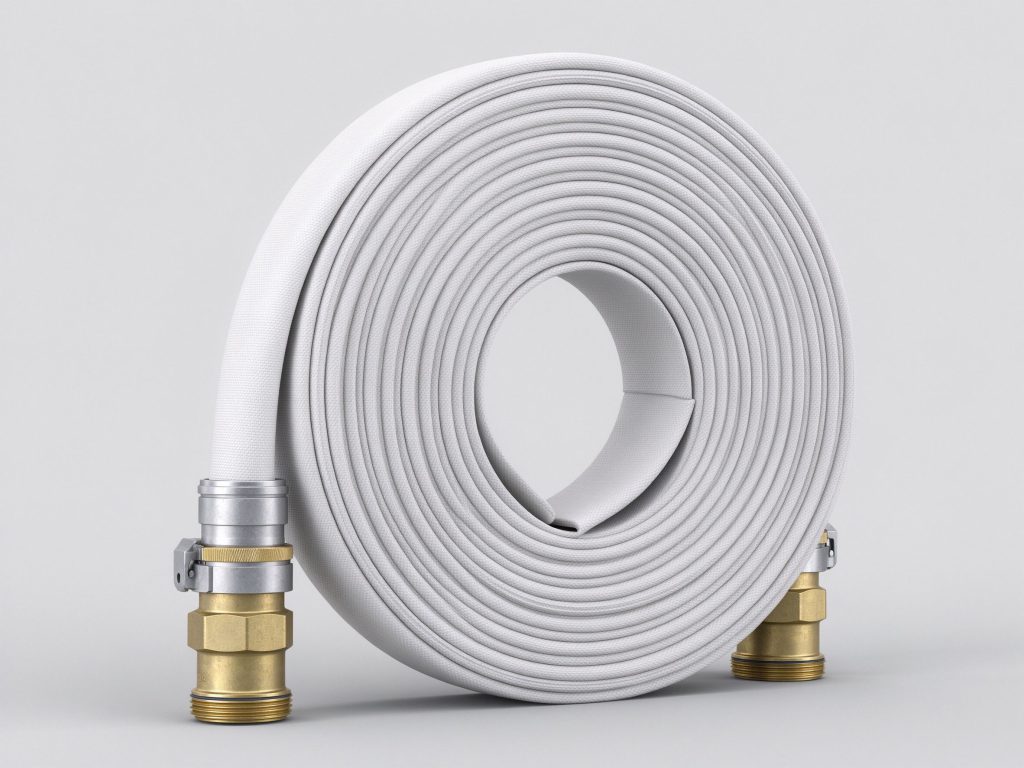
Lining material: EPDM versus natural rubber
The outer jacket is woven protection; the lining decides ageing resistance and pressure holding. Two lining types are common on the market: EPDM (ethylene propylene diene monomer) and natural rubber.
EPDM resists ozone, UV and seawater. It does not stiffen and crack as fast when hung on an exposed deck, and it costs less. It suits open decks and tropical or subtropical routes. Natural rubber lining stretches well and resists bending, staying flexible in low temperature, but it ages faster under prolonged sun and oil mist. It fits inside the engine room or shaded positions. We have seen owners cut cost by running cheap single-jacket hoses on the whole deck; after two seasons the lining bulged and water leaked at couplings, and the whole batch was called in for replacement at renewal survey. That cost more than specifying double-jacket lining up front.
Double jacket adds a second woven layer for abrasion and mechanical damage. Cargo oil area and deck positions with foot traffic and frequent handling should go double jacket first; fixed, low-friction storage inside the engine room can take single jacket.
Shore connections and flange matching
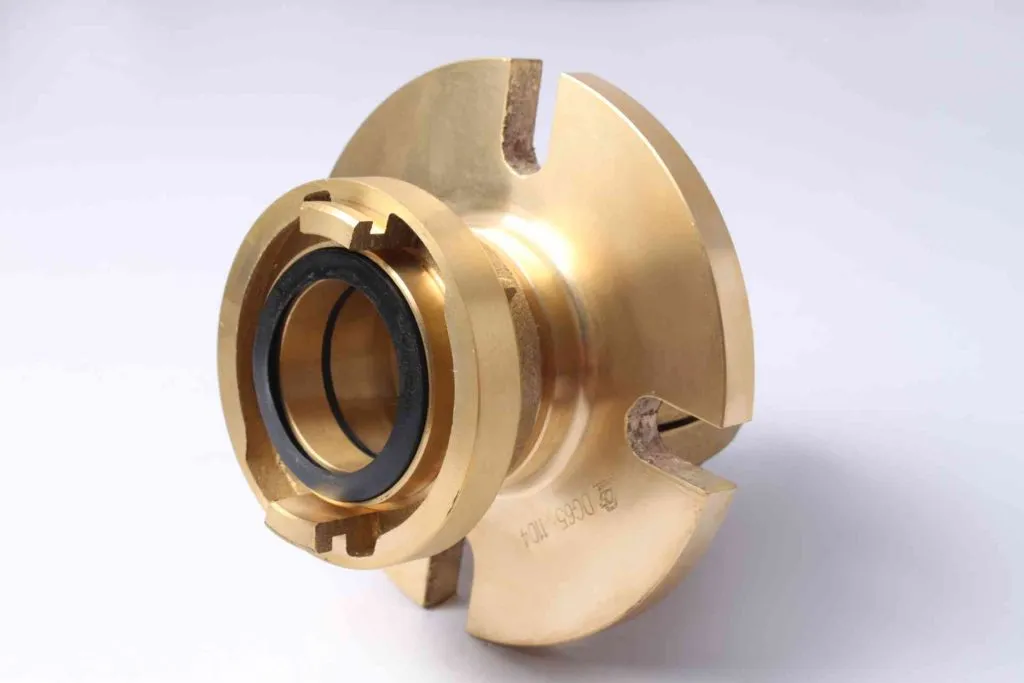
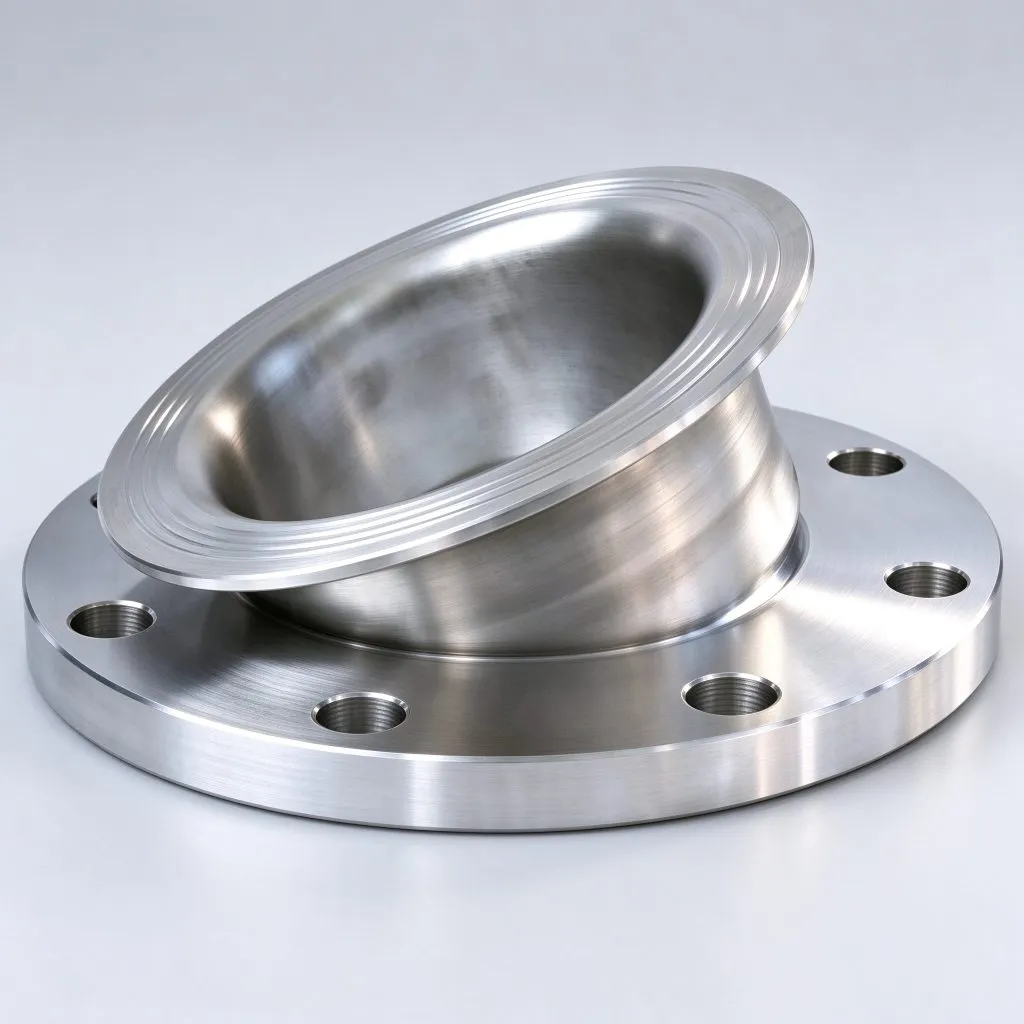
Shore water connects to the vessel through the international shore connection. Coupling forms include STORZ, NAKAJIMA and MACHINO; ports and vessel types differ in habit. When selecting the coupling, the flange standard must be checked at the same time: DIN, ANSI and JIS carry their own pressure ratings, and a mismatch in flange face or bolt hole spacing means no connection on site.
For example, the STORZ international shore connection pairs with a DIN 2656 lap joint flange PN40. Match the existing fire main flange standard and pressure rating before ordering the body alone. Keep a spare gasket set; hardened or deformed gaskets are a frequent PSC finding.
Common PSC findings on deck hoses and couplings
Recent port state records cluster around these points: hoses past overhaul life with cracked, mouldy or corroded lining and couplings; hose length or diameter not matching the equipment record; hardened, deformed coupling gaskets with no spare; flange standard not matching the ship’s main line; incomplete locker contents so nozzle, coupling and spanner cannot connect immediately.
Before each port call, the third mate should deploy deck hoses and check bends for lining cracks, de-rust and oil coupling threads and seal faces, and log spare gaskets. Carry out pressure tests to class requirements before renewal survey.
FAQ
Q: Can DN65 hoses be used in the engine room?
A: Yes, but heavier. The engine room normally follows drawings with DN50; DN65 is mainly laid on main deck and cargo oil area and should not be mixed by preference.
Q: Is EPDM lining acceptable on an LNG carrier deck?
A: EPDM weathering suits open decks, but LNG low temperature and media are specific. Confirm against the class-approved equipment list before selection and check the type approval certificate.
Q: How many coupling forms must a vessel carry?
A: Carry the required international shore connection and spares per SOLAS, covering common mating forms; confirm the local port’s usual coupling form before specific calls.
Q: How often should hoses be replaced?
A: There is no fixed year; replacement follows visual inspection and pressure test results. Cracked, bulged or leaking lining calls for replacement; stiffened rubber or whitened bends should be changed ahead of schedule.
Contact Us: liuhaiyan@hexingju.cn
HEXINGJU MARINE EQUIPMENT — Professional Marine Equipment Manufacturer, Marine Equipment, Global Shipping Available