Marine Fire Fighting System Price Comparison: A Selection Guide for Shipbuilders
核心结论
<h1>Marine Fire Fighting System Price Comparison: A Selection Guide for Shipbuilders</h1> <p>The global shipbuilding ind…
消防系统1 分钟阅读
<h1>Marine Fire Fighting System Price Comparison: A Selection Guide for Shipbuilders</h1>

<p>The global shipbuilding industry spends billions annually on marine safety equipment, and few purchases cause more buyer's remorse than a fire fighting system bought at the lowest price. Procurement managers and shipyard engineers know that a marine fire fighting system is not a commodity—it is a life-critical installation governed by SOLAS, class society rules, and flag state regulations. Yet market surveys consistently reveal that 40 to 60 percent of budget bids in this category are later supplemented by change orders, material substitutions, or hidden compliance costs. This guide cuts through the noise. It explains what drives pricing across major marine fire fighting system categories, exposes the most common cost traps, and gives you a practical framework for selecting a supplier that delivers real value within your budget.</p>

📷配图位

<h2>Understanding Marine Fire Fighting System Price Ranges</h2>

<p>A marine fire fighting system spans several distinct product lines, each with its own cost structure. Understanding these ranges prevents your procurement team from comparing incomparable quotes or being lured by artificially low line items.</p>

<p><strong>Fixed Fire Extinguishing Systems.</strong> Clean agent (FM-200, Novec 1230), CO₂, and foam-based fixed systems for engine rooms, cargo spaces, and machinery spaces typically range from <strong>$15,000 to $85,000 per unit installation</strong>, depending on protected volume, agent type, and certification class. CO₂ systems sit at the lower end; clean agent systems command a premium due to environmental compliance and complex piping design.</p>

<p><strong>Fire Detection and Alarm Systems.</strong> Addressable detector networks—heat, smoke, flame, and gas detection—integrated with a central control panel run from <strong>$8,000 to $45,000</strong> per vessel classification, varying significantly with zone count, redundancy requirements, and whether the system is MED-approved for passenger ships.</p>

<p><strong>Fire Hydrants, Hoses, and Nozzles.</strong> Per SOLAS Chapter II-2, every vessel requires a minimum hydrant and hose layout. Complete deck and internal hydrant networks typically cost <strong>$5,000 to $25,000</strong> for standard cargo vessels, scaling upward for tankers and LNG carriers with explosion-proof requirements.</p>

<p><strong>Fire Doors and Fire Dampers.</strong> Class A-60 and A-0 steel fire doors range from <strong>$800 to $3,200 per unit</strong>, while motorized fire dampers in ventilation trunks run <strong>$1,200 to $4,500 each</strong>. These are frequently the first items where contractors substitute thinner gauge materials after award.</p>

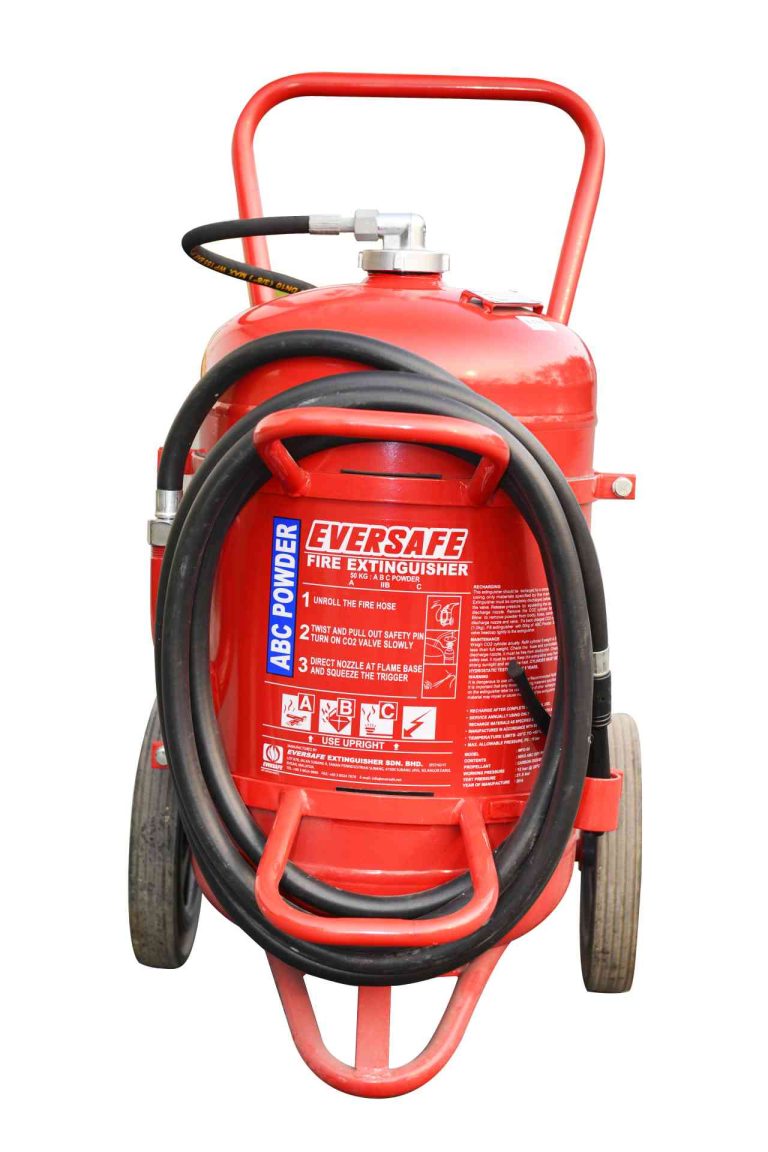
<p><strong>Portable Fire Extinguishers.</strong> A full vessel complement—CO₂, dry powder, and water foam types—typically falls between <strong>$2,000 and $12,000</strong>, but certification marks (MED, USCG, CCS) must match your flag state and route requirements.</p>

<h2>The Price Trap: How Low-Bid Suppliers Undermine Value</h2>

<p>Low-bid procurement in the marine fire fighting space follows a well-documented pattern. The supplier wins the contract with an aggressive quote, then erodes margins through three primary tactics:</p>

<p><strong>Material substitution after award.</strong> A quote specifies fire-rated doors at 2.0 mm inner skin gauge. Four weeks after contract signing, the supplier delivers doors with 1.5 mm gauge panels, claiming a "supply chain adjustment." The door still passes a visual inspection—but it will not meet the required 60-minute integrity test under actual fire conditions. Buyers who do not specify exact material thicknesses in the purchase order face this exact scenario routinely.</p>

<p><strong>Certification mismatches.</strong> A supplier may quote a fire pump at a compelling price, only to deliver a unit with DNV or ABS certification when your vessel class requires CCS or BV. The equipment functions identically on paper, but the classification society will reject it during survey, forcing a last-minute replacement at 2.5 to 3 times the original cost. Always verify that the certification body listed on the quote matches the requirement in your shipbuilding contract.</p>

<p><strong>Hidden installation and commissioning fees.</strong> The base equipment price may appear competitive, but the supplier excludes pressure testing, hydrostatic testing documentation, control panel programming, and class surveyor coordination. These line items surface during execution as variation orders. A comprehensive marine fire fighting system quote should include pre-commissioning support, documentation packages (FAT reports, calibration certificates, certification copies), and at least one site visit for final integration.</p>

<p>The genuine cost-performance equation is not the lowest unit price. It is the total cost of ownership across procurement, installation, survey approval, maintenance, and warranty support—delivered within your operational budget. Our forty-year track record across two generations of shipyard partnerships has shown that yards selecting on total value rather than headline price achieve approximately a 7:1 return on their marine fire fighting system investment when you factor in avoided rework, class approval delays, and reduced warranty claims.</p>

<h2>How to Select a Marine Fire Fighting System Supplier</h2>

<p>A disciplined selection process protects your project timeline and your margin. Follow these five steps:</p>

<p><strong>1. Define your class and flag requirements before requesting quotes.</strong> List every applicable standard—SOLAS, MED, CCS, ABS, DNV, LR, USCG—and require each bidder to confirm compliance in writing. Do not accept "equivalent to" language without documented class society equivalence letters.</p>

<p><strong>2. Request line-item breakdowns, not lump-sum quotes.</strong> A supplier confident in their pricing will itemize equipment, certification, testing, packaging, and delivery separately. Vague quotes are a warning sign. Cross-check that every line item references the correct certification body and standard version.</p>

<p><strong>3. Verify certifications independently.</strong> Do not rely solely on the supplier's certificate copy. Contact the issuing certification body—CCS, DNV, ABS, BV, or LR—directly to confirm the certificate is current, covers the exact product model, and has not been suspended or withdrawn.</p>

<p><strong>4. Insist on written quality guarantees.</strong> Industry-leading suppliers back their equipment with contractual quality commitments, not verbal assurances. A supplier that stands behind a written penalty clause for non-conforming goods demonstrates confidence in its manufacturing process. Ours includes explicit contractual remedies for material or certification failures.</p>

<p><strong>5. Evaluate after-sales responsiveness.</strong> A marine fire fighting system installed today must be maintainable tomorrow. Confirm that the supplier offers 24-hour domestic response and has service coverage at the ports where your vessels will operate. Factory inspection visits—by you or a third-party audit firm—should be welcomed, not deferred. Transparency at this stage predicts transparency throughout the project lifecycle.</p>

<p>When you apply these steps consistently, you filter out suppliers whose low bids depend on post-award cost recovery tactics. You also build a partnership that supports your vessel throughout its operational life, not just through the delivery certificate.</p>

<h2>FAQ</h2>

<section>
<h2>Frequently Asked Questions</h2>
<div>
<h3>What is the typical price range for a complete marine fire fighting system on a cargo vessel?</h3>
<div>
<p>A complete marine fire fighting system for a standard cargo vessel—including fixed fire suppression, detection and alarm, hydrants and hoses, fire doors, and portable extinguishers—typically ranges from <strong>$50,000 to $200,000</strong> depending on vessel size, protected space count, agent type, and required certification class. Tankers and LNG carriers command higher prices due to explosion-proof and specialized foam system requirements.</p>
</div>
</div>
<div>
<h3>Which certifications are most important when purchasing a marine fire fighting system?</h3>
<div>
<p>The essential certifications depend on your vessel type and operating registry. SOLAS is mandatory for all international seagoing vessels. MED approval is required for passenger ships and certain cargo vessels under EU regulation. Major class societies—including CCS, ABS, DNV, BV, and LR—each have specific technical requirements. USCG certification is required for vessels operating in U.S. waters. Always match the certificate to your actual class and flag state, not just the lowest-priced option.</p>
</div>
</div>
<div>
<h3>How can I avoid hidden costs when sourcing a marine fire fighting system?</h3>
<div>
<p>Require detailed line-item quotations that include equipment, certification, factory acceptance testing, hydrostatic testing documentation, packaging, delivery, and pre-commissioning support. Verify every certificate independently with the issuing body before signing. Insist on written quality guarantees with contractual remedies. Confirm after-sales service coverage at your vessel's operating ports. Suppliers who resist these transparency measures are the ones most likely to introduce variation orders after award.</p>
</div>
</div>
<div>
<h3>Why do some marine fire fighting system suppliers offer prices significantly below market average?</h3>
<div>
<p>Below-market pricing in this category almost always signals one or more of the following risks: material downgrades (thinner gauge steel, lower-grade seals, counterfeit certification marks), incomplete scope exclusion (omitting testing, documentation, or commissioning support), or certification mismatches that will surface during class survey. A price that looks attractive on paper often becomes the most expensive option once rework, delays, and replacements are factored in.</p>
</div>
</div>
</section>

<h2>Make the Right Choice for Your Next Vessel</h2>
Contact Us: liuhaiyan@hexingju.cn HEXINGJU MARINE EQUIPMENT — Professional Marine Equipment Manufacturer, Certificates Issued per Model, Global Shipping Available