Immersion Suit Selection and Inspection: Anti-Exposure Suit vs Lifejacket, Storage and Donning Checks
Last year, before a renewal survey, a general cargo ship trading a Nordic route counted its life-saving gear. The third officer pulled the immersion suits out of the locker and laid them on deck.
Immersion Suit Selection and Inspection: Anti-Exposure Suit vs Lifejacket, Storage and Donning Checks
On one, the zipper jammed halfway and the sealing gasket had turned hard and sticky. On another, the reflective tape at the cuff had peeled off in a strip. The inspector ruled both no longer serviceable and flagged replacement. In cold waters, immersion suits and lifejackets are often talked about as one group, but they cover two different jobs.
An immersion suit (anti-exposure suit, survival suit) reduces heat loss after entering the water and delays hypothermia. A lifejacket keeps the head above water. On low-temperature routes the two have to be provisioned separately; one cannot stand in for the other. This guide walks through the difference, the points to check when selecting them, and how to store and inspect them on board.
Immersion Suit vs Lifejacket: They Are Not the Same Gear
| Type | Primary role | Wear characteristics | Common provisioning |
| Lifejacket | Keeps the head above water, provides buoyancy | Light, suitable for everyday wear | Deck watch, general crew provisioning |
| Immersion suit (anti-exposure suit) | Reduces heat loss in cold water, delays hypothermia | Insulated fabric, full-body enclosure | Cold-water work, emergency abandonment |
| Combined relation | On entry, the suit protects against cold and the jacket gives buoyancy; some models are used as a pair | Wearing order and interference are checked during try-on | Provisioned to the equipment record on low-temperature routes |
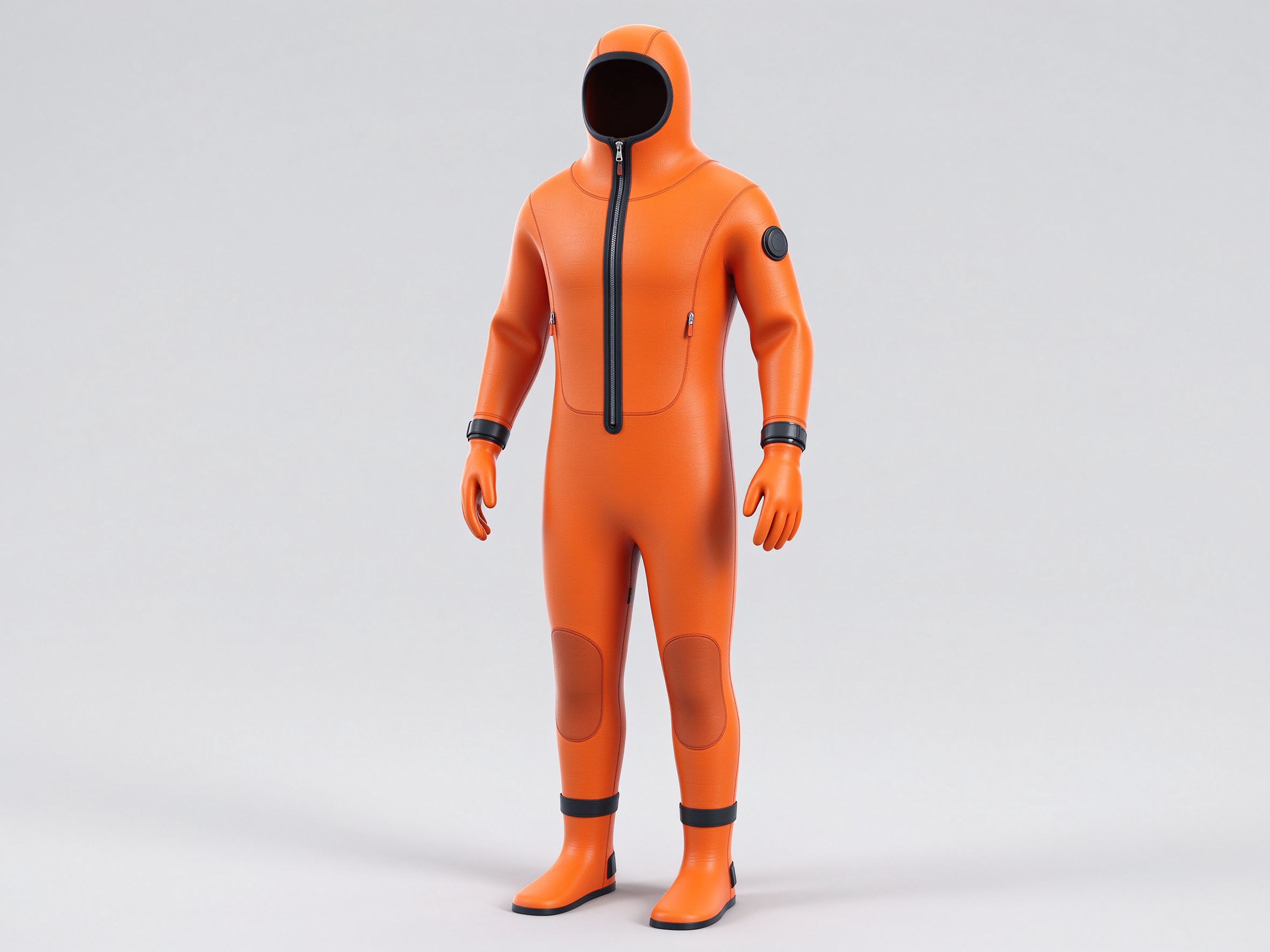
Note: an immersion suit is not a lifejacket. Wearing the suit alone may not meet the buoyancy requirement; how many sets and who wears them must be checked against the ship’s equipment record and the accompanying certificate. The insulated immersion suit ZY-IS-01 uses neoprene foam insulation, rated buoyancy ≥100N, donning time ≤2 minutes, for seawater -1°C to +30°C. Confirm the figures against the specification table and accompanying documents.
What to Check When Selecting
Insulation material comes first. Neoprene foam is a common grade; look at fabric thickness and the workmanship at stitching and sealed areas, not just the outer thickness. Buoyancy is checked against the post and route requirements, accounted for separately from the lifejacket buoyancy provision. Donning time matters: the suit must be wearable within the allowed time in an emergency, and zippers and fasteners must work smoothly. Sizing follows chest and height; when the paired lifejacket is worn over it, the suit must not ride up or restrict arm movement.
The counterexample: on warm tropical routes, a thick insulated suit adds little; conversely, a cold-water route carrying only lifejackets leaves a high hypothermia risk. Select by water temperature and crew size rather than copying a single catalog model. The lifejacket and immersion suit combination shows how the two sets are paired.
Storage and Pre-Issue Inspection
Start with storage: hang suits in a dry, easy-to-reach locker; do not leave them pressed at the bottom of a hold where they pick up moisture, and keep them away from direct sunlight and oil. On each issued suit, check the appearance first: cuts or aging cracks in the fabric; loose stitching; zipper movement and deformed teeth; gasket that is not hard or sticky; reflective tape firmly attached, not peeling off in strips; whistle and light (if fitted) present and working.
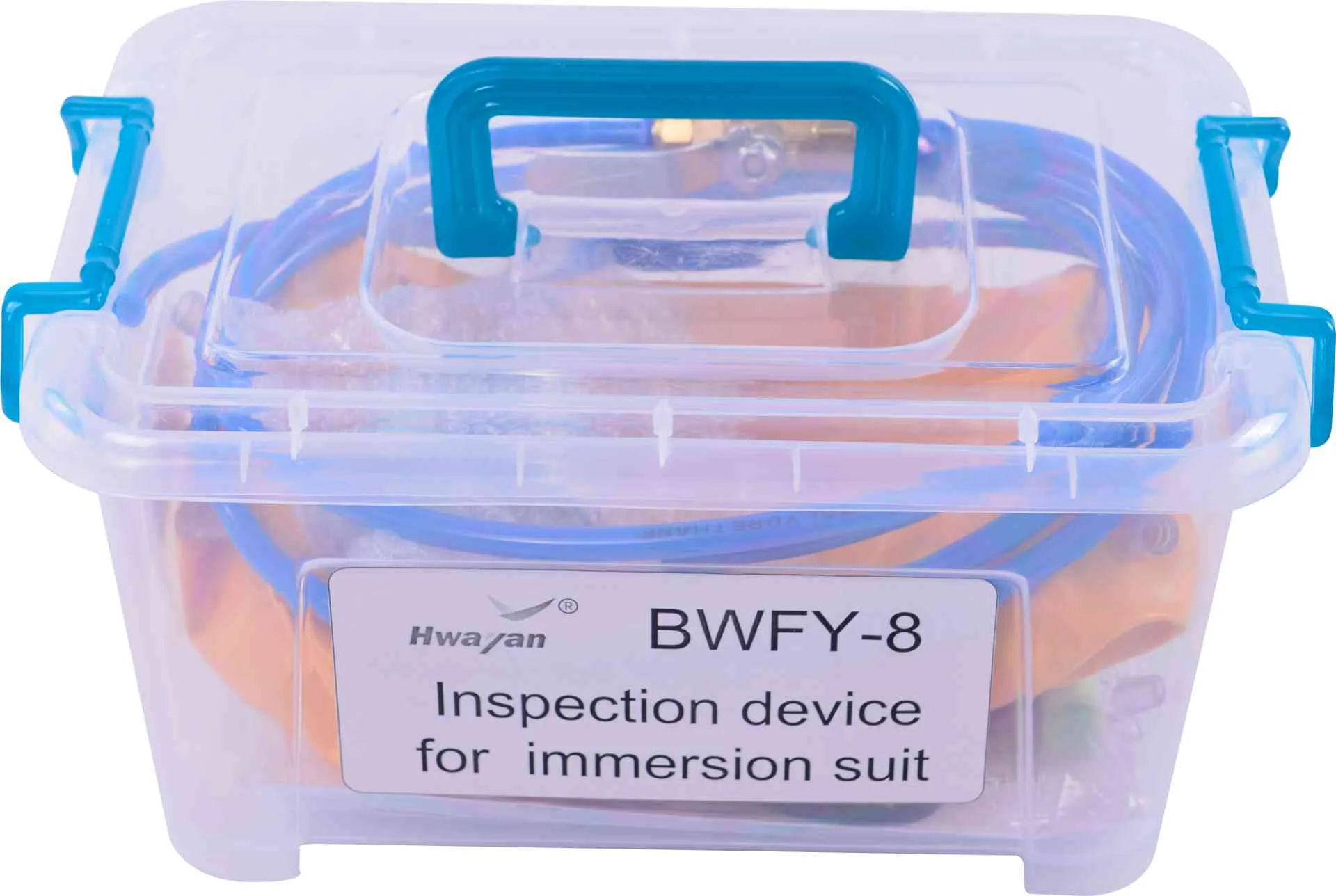
Then run a donning try-on: the zipper closes smoothly, cuffs, waist and neck seal fit, and wearing the paired lifejacket over it does not interfere. Periodic inspection follows the equipment record cycle; replace for fabric aging, sticky gaskets or zipper damage, rather than using the warehousing date as a blanket cutoff. For standardized checks, use the immersion suit inspection device BWFY-8. More models can be sorted by route and size on the immersion suit category page.
Common PSC Deficiencies
In port state control records, immersion suit deficiencies cluster around these items: size mismatch with the wearer; damaged fabric or loose stitching; jammed zipper or aged hard gasket; reflective tape detached; missing whistle or light; mildew from long-term damp storage; unclear pairing with the lifejacket, or insufficient provisioning for the persons on board.
Before each port call, the third officer can spot-check: fabric and stitching on every suit, zippers and fasteners worked by hand, gaskets and reflective tape verified, whistle and light confirmed working. Run a full check again before the renewal survey as required by the class society, and keep spares to the record.
Frequently Asked Questions
Q: Can an immersion suit replace a lifejacket?
A: No. The suit delays hypothermia; the jacket keeps the head above water. They serve different purposes. Cold-water routes provision both separately; follow the ship’s equipment record for quantities and models.
Q: Is there a fixed service life for an immersion suit?
A: Judged on inspection: replace for fabric aging cracks, sticky gasket or zipper damage, not by the warehousing date as a blanket rule. Cylinders, lights and accessories are replaced by their label expiry separately.
Q: Which routes need immersion suits?
A: Prioritize routes with low water temperature and long rescue times. Warm tropical waters follow the equipment record and route requirements; there is no need to over-insulate.
Q: How should immersion suits be stored to last?
A: Hang in a dry, ventilated locker, away from heavy pressure, sunlight and oil; inspect fabric, zipper, gasket and reflective tape regularly and replace aging parts in time.
Contact: liuhaiyan@hexingju.cn
Hexingju Marine Equipment — marine life-saving equipment manufacturer, quoted by spec and quantity, shipping worldwide