Lifejacket Selection and On-Board Inspection: Adult, Working and Inflatable Buoyancy Compared, SOLAS Provisioning Checklist
Last year at a Guangzhou repair quay, a general cargo ship was restocking and the third officer laid the old lifejackets out on deck to count. An inspector picked up a working model: the armpit stitching was frayed and the shoulder buckle was cracked along one side.
Lifejacket Selection and On-Board Inspection: Adult, Working and Inflatable Buoyancy Compared, SOLAS Provisioning Checklist
Another inflatable had its cylinder pressure needle sitting in the red zone. Both were judged inoperative, and two children’s sizes had to be replenished along with them. Lifejackets hang on locker hooks and look much the same, but when it comes to provisioning and inspection, who wears which, whether the buoyancy is adequate, and whether the chamber holds air are very concrete questions.
On board, lifejackets split into inherent-buoyancy, working and inflatable types, then into adult, child and infant sizes. Start from the ship’s equipment record: how many persons on board and what work each post does, before choosing a model. This guide walks through the issues that actually come up during selection and on-board checks.
Inherent Buoyancy, Working and Inflatable: Sort the Three First
| Type | Characteristics | Common use | Watch-outs |
| Adult inherent-buoyancy | Buoyant material sealed inside the jacket; flotation works on entering the water, no inflation needed | Regular deck watch and general crew provisioning | Heavier and warmer to wear than an inflatable; check stitching and cover fabric regularly |
| Working lifejacket | Cut for freedom of movement, suited to bending, climbing and machinery work | Engine room, deck operations, mooring, maintenance and other high-activity posts | Some working models sit below the standard adult buoyancy level and cannot be swapped across posts |
| Inflatable | Light when deflated; develops buoyancy automatically or manually on entry | Posts needing large movement and light wear | Relies on the cylinder and trigger mechanism; check pressure, firing cord and sealing diaphragm. Inflatable-only is not advised for solo or inshore work |
Inherent-buoyancy jackets float regardless of the wearer and suit standard provisioning; inflatables are light but have a longer maintenance chain, and any weak link can prevent inflation when it matters. The adult lifejacket MLSE121-1 is a standard inherent-buoyancy model; confirm the buoyancy figures and suitable posts against the product certificate and your own equipment record.
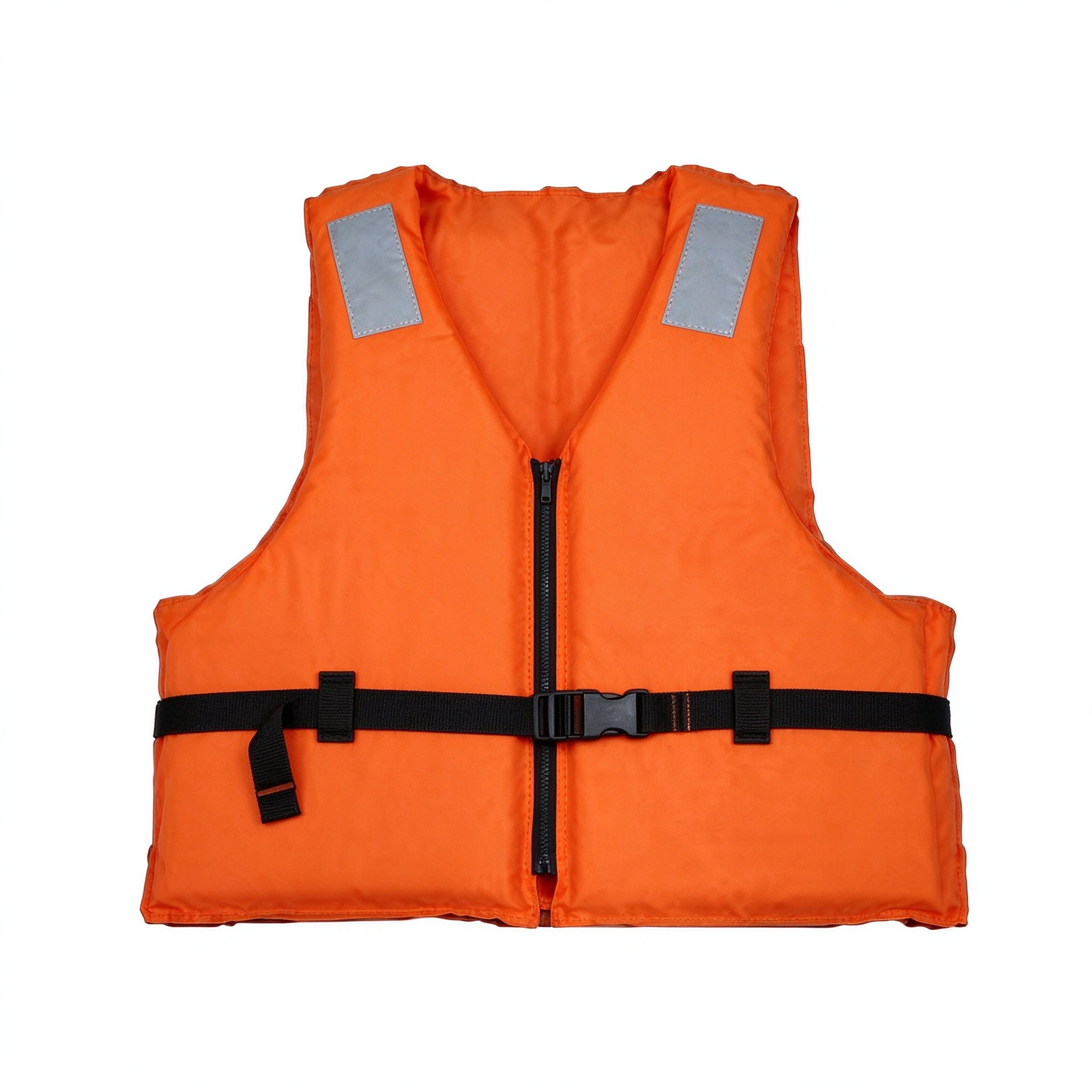
Buoyancy and Size: Do Not Grab by Weight
Adult models commonly sit around the 150N class; child and infant sizes are separate, and an adult jacket cannot be narrowed down as a makeshift substitute. Size is chosen by chest and weight range; when fastened, shoulder straps must not ride up to the chin and the body must not swim upward in the water. A heavy crew member in a tight jacket chokes at the armpits; a slim crew member in an oversized one floats up around the body and fails to support it.
Posts call for different cuts. Engine room work means bending into machinery; deck mooring means frequent turning. A bulky standard jacket restricts movement, and these posts fit a sleeker working model better. The working lifejacket MLSE123-1 targets high-activity posts; before ordering, confirm whether its buoyancy level meets the post requirements.
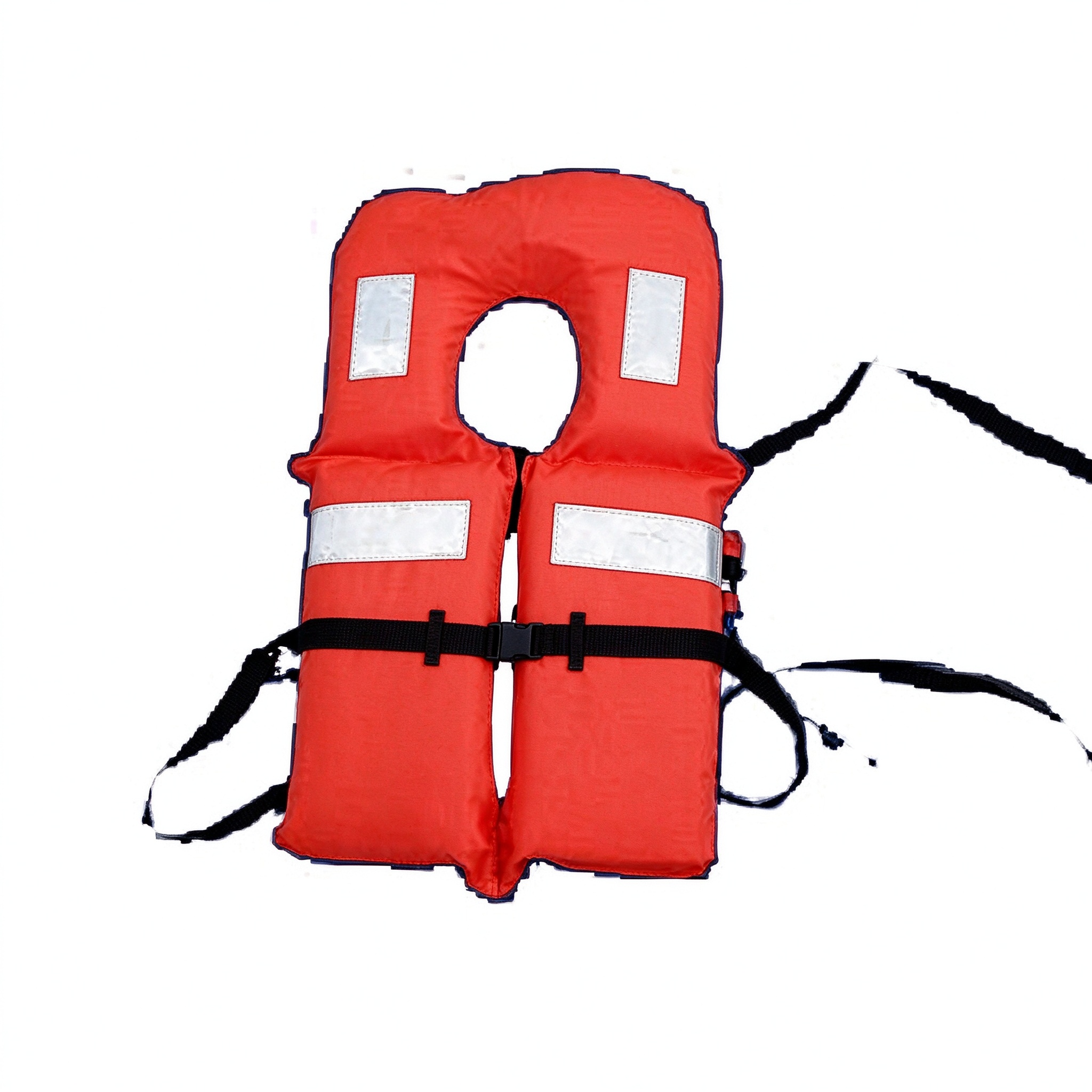
Pre-Issue Inspection: Stitching, Whistle, Reflective Tape and Light
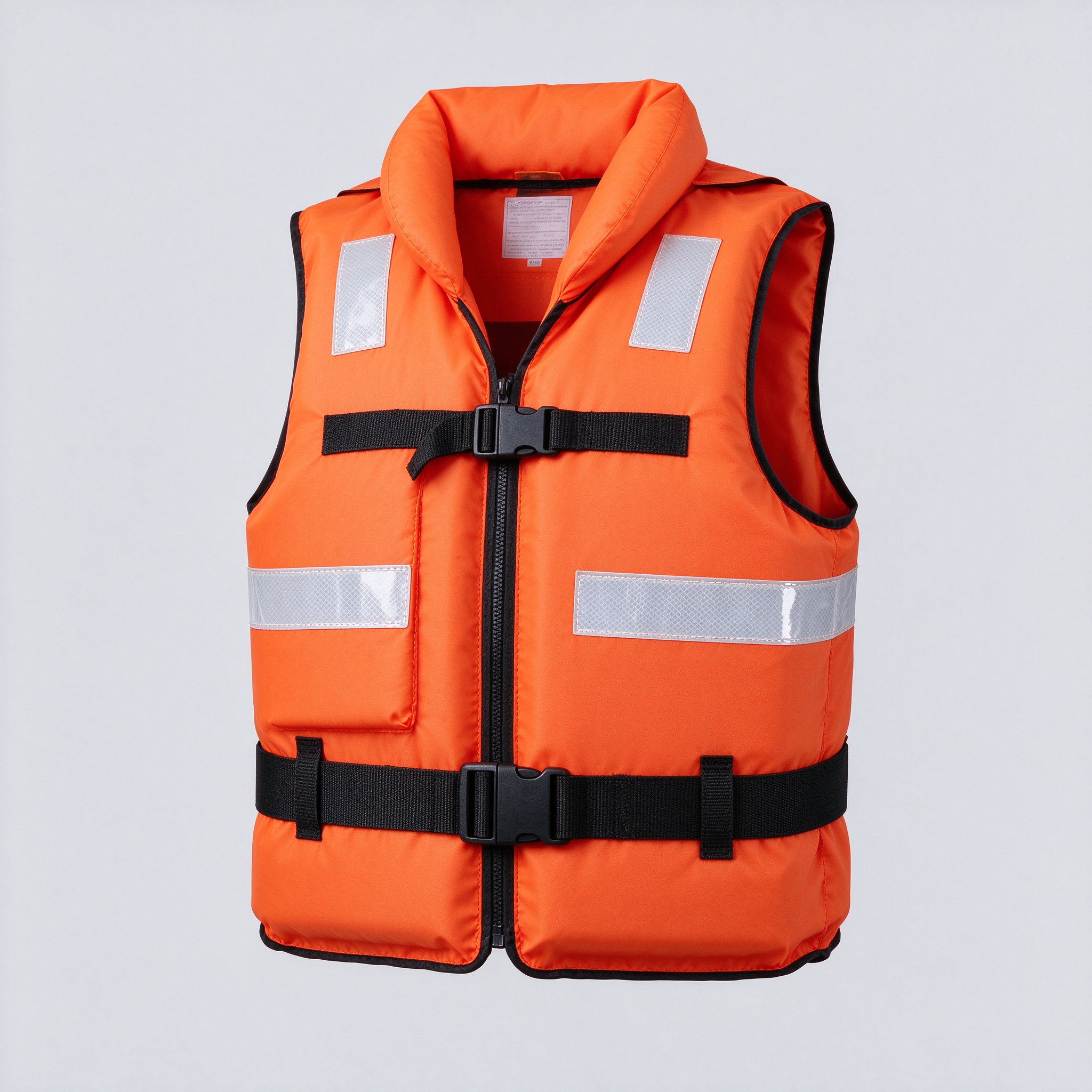
Run through each jacket before issue. Check cover fabric and stitching first: armpits, shoulder straps and waist sides for fraying, loose threads or cuts. Then fasteners: buckles open and close smoothly, webbing is not fuzzy or frayed. The whistle must be present and blowable. Reflective tape is firmly attached, not peeling off in strips. On models fitted with a light, test the jacket light to confirm it lights, and check the battery is within validity.
Inflatable models add a few more checks: cylinder pressure needle in the green zone, firing cord intact, sealing diaphragm undamaged, chest pad and chamber free of cracks and aging. A dual-chamber design retains partial buoyancy if one chamber fails, giving higher redundancy for safety-critical posts. The dual-chamber lifejacket MLSE122 is this type; confirm it against the work environment and certificate parameters. More models can be sorted by post and size on the lifejacket category page.
Common PSC Deficiencies
From recent port state control records, lifejacket deficiencies cluster around these items:
Adult, child and infant sizes mixed, or child/infant models missing; frayed stitching or damaged cover; cracked buckles or frayed webbing; whistle missing or silent; reflective tape detached; jacket light inoperative or battery expired; inflatable cylinder under pressure or trigger mechanism damaged; size mismatch, riding up and failing to support the wearer.
Before each port call, the third officer can spot-check: appearance and stitching on every jacket, buckles and webbing worked by hand, whistle blown, reflective tape and light checked, and inflatable cylinder pressure verified. Run a full check again before the renewal survey as required by the class society, and keep spares to the record.
Frequently Asked Questions
Q: Is an inflatable lifejacket a higher grade than an inherent-buoyancy one?
A: No. They suit different scenarios. Inflatables are light and free-moving but rely on the cylinder and trigger; inherent-buoyancy jackets float on entry and are simple to maintain. For solo work, inshore work or crew unfamiliar with inflation, the inherent-buoyancy model is the safer choice.
Q: Can an adult lifejacket be altered down for a child or infant?
A: No. Child and infant models carry separate buoyancy requirements; a narrowed adult jacket fails both fit and buoyancy. Provision matching sizes must follow the persons on board.
Q: Can a working lifejacket replace the standard adult jacket across the whole ship?
A: Only if the working model’s buoyancy level meets the post and equipment record requirements. Some working models trade part of their buoyancy for movement and suit specific posts; a blanket replacement across posts is not advised.
Q: Is there a fixed service life for lifejackets?
A: Judged on inspection: replace for damaged cover, broken stitching, aged fasteners or chamber cracks. Inflatable cylinders and batteries are replaced by their label expiry, independent of the jacket body life.
Contact: liuhaiyan@hexingju.cn
Hexingju Marine Equipment — marine equipment manufacturer, built to SOLAS requirements, shipping worldwide